
About the Writer

Veterinary Career Paths: Your Devoted, Helpful Guide

When people think of a career in veterinary medicine, they often picture a clinic vet treating dogs and cats. But the truth is, the veterinary field is far more diverse than most realize. From working with exotic wildlife to researching life-saving treatments, veterinary professionals play a crucial role in many industries beyond private practice.
Understanding these career paths isn’t just interesting—it’s essential for professionals looking to expand their opportunities, specialize, or pivot within the field. Whether you’re a recent graduate exploring options or an experienced vet seeking a new challenge, knowing what’s out there can open doors you didn’t even know existed.
Exploring your options is essential if you’re considering a career in this field. In this guide, we’ll break down the roles of veterinary assistants, veterinary technicians, and veterinarians—highlighting key differences, educational requirements, job responsibilities, and growth opportunities.
Key Considerations Before Pursuing a Veterinary Career
Before diving into a veterinary career, there are several factors to consider:
Emotional and Physical Demands
- Working with animals is rewarding, but it can also be emotionally taxing. You may face difficult ethical decisions and situations involving animal suffering.
- The job often involves long hours, weekend shifts, and physically demanding tasks like lifting animals or standing for extended periods.
Work-Life Balance and Stress Management
- Veterinary professionals can experience compassion fatigue from dealing with sick or injured animals. Learning stress management techniques, such as mindfulness and proper self-care, is essential.
Practical Considerations
Salary Angle:
According to Talent, the salaries in the USA for 2025 are:
- The average veterinary assistant salary in the USA is $35,100 per year or $16.88 per hour. Entry-level positions start at $29,713 annually, while most experienced workers make up to $46,359 annually.
- The average veterinary technician (vet tech) salary in the USA is $49,920 per year or $24 per hour. Entry-level positions start at $39,731 annually, while most experienced workers make up to $62,400 annually.
- The average veterinarian salary in the USA is $119,994 per year or $57.69 per hour. Entry-level positions start at $80,227 annually, while most experienced workers make up to $167,932 annually.
Job Outlook:
- The veterinary field is growing, with an increasing demand for qualified professionals.
- There are ample opportunities for career growth and lifelong learning, whether through certifications, specialization, or further education.
How to Get Started in Veterinary Careers
High School or College Preparation
- Focus on biology, chemistry, and animal science courses.
- Gain hands-on experience through volunteering or part-time jobs at animal shelters, veterinary clinics, or farms.
Gaining Experience (Volunteering, Internships, Shadowing)
- Internships and shadowing professionals can provide insight into daily responsibilities.
- Consider joining organizations such as the American Veterinary Medical Association (AVMA) for networking opportunities.
Networking and Mentorship Opportunities
Recommended Resources
- Websites: AVMA, AAVMC (Association of American Veterinary Medical Colleges)
- Journals: Journal of Veterinary Medicine, Veterinary Clinics of North America
- Associations: National Association of Veterinary Technicians in America (NAVTA), American College of Veterinary Surgeons (ACVS)
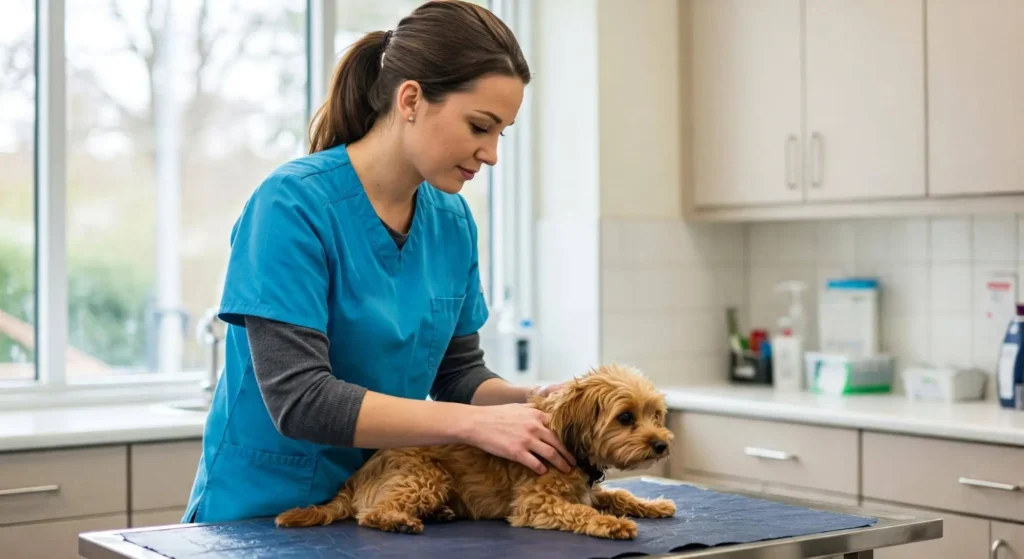
Veterinary Assistant
Role & Responsibilities
Veterinary assistants play an essential role in veterinary care by supporting veterinarians and technicians and ensuring animals’ comfort and well-being. Here are their primary roles and responsibilities:
Animal Care and Handling
- Feed, groom, bathe, and exercise animals.
- Comfort and calm animals during visits or procedures.
- Observe animals for changes in health, behavior, or condition.
Supporting Veterinary Procedures
- Assist veterinarians and technicians during examinations and treatments.
- Restrain animals safely for injections, blood draws, or procedures.
- Prepare treatment areas by gathering equipment and supplies.
Maintaining Cleanliness and Hygiene
- Clean cages, kennels, examination rooms, and surgical areas.
- Sterilize and prepare surgical tools and instruments.
- Properly dispose of medical waste and maintain a clean, sanitary environment.
Administrative and Client Communication
- Answer phones, schedule appointments, and manage records.
- Check in patients, gather medical histories, and provide basic information to pet owners.
- Offer comfort and reassurance to pet owners during difficult moments.
Inventory Management
- Restock medical supplies and equipment.
- Track inventory levels and report shortages.
- Ensure supplies are stored properly.
Essential Skills and Qualities
- Compassion and patience with animals and owners.
- Good interpersonal and communication skills.
- Ability to handle stressful or emotional situations calmly.
- Physical stamina and strength for lifting animals and extended periods of standing.
Veterinary assistants are crucial team members who ensure veterinary practices run smoothly and provide comfort and care to animals in need.
Required Education & Skills
High School Diploma or Equivalent
- Most veterinary assistant positions require at least a high school diploma or GED.
Optional Training or Certification:
- While not always mandatory, many veterinary assistants benefit from completing a veterinary assistant certification or training program offered through vocational schools or community colleges.
- These programs typically last from several weeks to several months and cover animal care basics, anatomy, handling techniques, and veterinary procedures.
On-the-job Training:
- Most veterinary assistants receive practical training directly from veterinarians or veterinary technicians in a clinical environment.
| Advantages | Disadvantages |
Rewarding and Meaningful Work:
| Physically Demanding Work:
|
Entry-Level Accessibility:
| Emotionally Challenging:
|
Variety in Daily Activities:
| Relatively Low Pay:
|
Stepping Stone for Career Advancement:
| Irregular Hours:
|
Strong Job Outlook:
| Limited Autonomy:
|
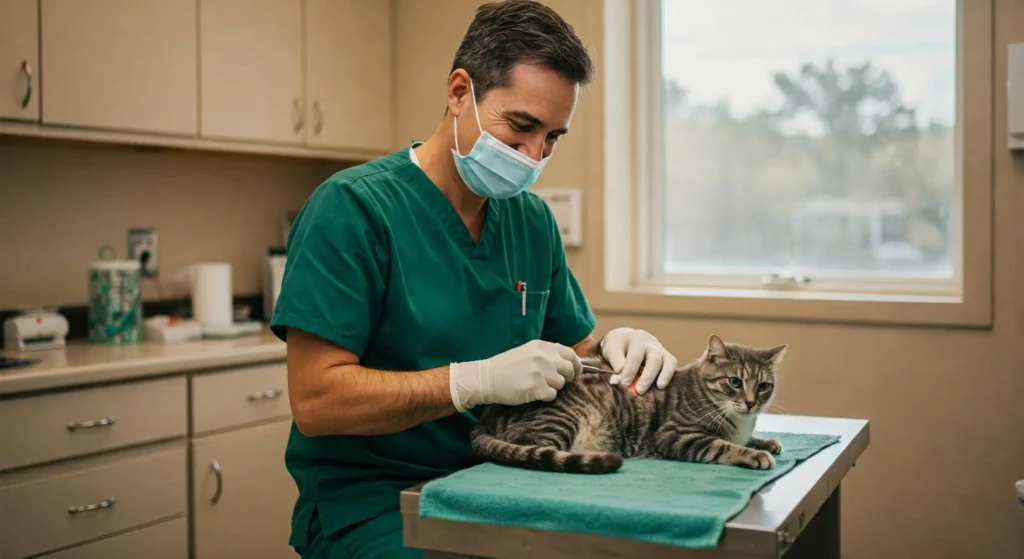
Veterinary Technician (Vet Tech)
Role & Responsibilities:
Veterinary technicians, often called Vet Techs, play a critical role in veterinary practices by providing skilled support to veterinarians and delivering specialized care to animals.
Here’s an overview of their primary roles and responsibilities:
Clinical and Diagnostic Duties
- Collect and analyze lab samples (blood, urine, feces).
- Perform diagnostic tests such as X-rays, ultrasounds, and EKGs.
- Accurately record patient vital signs (temperature, pulse, respiratory rate).
Assisting in Surgical Procedures
- Prepare animals for surgery (shaving, sterilization of surgical sites).
- Administer anesthesia and monitor animals throughout the surgery.
- Provide postoperative care and monitoring, ensuring comfort and recovery.
Medication Administration
- Administer vaccines, medications, and treatments as prescribed by veterinarians.
- Monitor animals for reactions or side effects, documenting any changes.
Dental Care
- Conduct dental cleanings, polishing, and scaling.
- Take and process dental X-rays.
- Educate pet owners on proper oral hygiene and preventative care.
Emergency and Critical Care
- Provide immediate care in emergency situations, stabilizing animals for further treatment.
- Assist veterinarians during urgent or critical medical interventions.
Animal Nursing and Care
- Deliver specialized nursing care to sick, injured, or hospitalized animals.
- Closely monitor animal health, noting changes and reporting to veterinarians.
Client Communication and Education
- Communicate effectively with pet owners regarding treatments, medications, and procedures.
- Educate clients about animal care, nutrition, disease prevention, and follow-up instructions.
Administrative and Record-Keeping Duties
- Accurately document medical histories, treatments, and patient information.
- Maintain organized records, assist in scheduling, and inventory management.
Required Education & Skills:
Associate Degree (Typically 2-Year Program)
- Veterinary technicians usually complete an Associate Degree in Veterinary Technology.
- Plans must be accredited by the American Veterinary Medical Association (AVMA).
Veterinary Technician National Examination (VTNE)
- After graduation, candidates must pass the VTNE, a standardized national licensing exam.
- Most states require this examination to practice as a registered, licensed, or certified Veterinary Technician.
State-Specific Licensing or Registration
- Licensing requirements vary by state but typically involve passing the VTNE.
- Some states have additional requirements (continuing education, background checks, etc.).
Continuing Education
- Many states require periodic continuing education to maintain licensing or certification.
Pros and Cons of this Path:
| Advantages | Disadvantages |
Rewarding and Meaningful Work:
| Emotionally Stressful:
|
Strong Job Demand:
| Physically Demanding:
|
Variety and Continuous Learning:
| Moderate Salary Levels:
|
Career Growth and Advancement:
| Long or Irregular Hours:
|
Professional Autonomy and Skill Application:
| Extensive Education and Certification Requirements:
|

Veterinarian (DVM)
Role & Responsibilities:
Examination and Diagnosis
- Conduct thorough physical examinations of animals.
- Diagnose illnesses or injuries using clinical signs, medical histories, lab tests, and diagnostic imaging (X-rays, ultrasound).
Medical and Surgical Treatment
- Develop treatment plans and prescribe medications.
- Perform surgical procedures (spay/neuter, orthopedic surgeries, tumor removal, dental surgery).
- Administer or oversee anesthesia and pain management.
Preventative Care
- Administer vaccines and parasite control treatments.
- Educate pet owners on nutrition, disease prevention, and proper animal care.
- Conduct routine wellness exams.
Emergency and Critical Care
- Provide urgent care to critically injured or ill animals.
- Make rapid medical decisions to stabilize and treat emergencies.
Communication and Client Education
- Clearly explain diagnoses, treatment options, prognosis, and preventive care measures to pet owners.
- Provide emotional support and counseling, especially during difficult decisions (e.g., euthanasia, chronic illnesses).
Public Health and Disease Control
- Prevent and manage zoonotic diseases (illnesses transmissible between animals and humans).
- Contribute to public health through vaccination programs, disease surveillance, and biosecurity.
Record-Keeping and Administration
- Maintain detailed patient records, treatment histories, and prescriptions.
- Oversee inventory, medical supplies, and staff management in veterinary practice.
Research and Specialization (Optional)
- Conduct research on animal diseases, treatments, and welfare.
- Specialize in specific areas (internal medicine, surgery, oncology, dermatology, exotic animals).
Ethical and Regulatory Compliance
- Adhere strictly to ethical guidelines, animal welfare laws, and regulations.
- Maintain licensing through continuing education and compliance with state veterinary boards.
Required Education & Skills:
Bachelor’s Degree (Pre-Veterinary Education)
- Complete undergraduate coursework emphasizing biology, chemistry, physics, mathematics, and animal science.
- Gain experience through volunteering, internships, or shadowing veterinarians.
Doctor of Veterinary Medicine (DVM) Degree
- Enroll in an accredited veterinary school (typically a 4-year program).
- Coursework includes animal anatomy, physiology, pharmacology, pathology, surgery, diagnostics, and clinical rotations.
Licensure and Certification
- Pass the North American Veterinary Licensing Examination (NAVLE).
- Obtain state-specific licensing; requirements vary by location.
- Some veterinarians pursue board certification for specialties (e.g., surgery, dermatology, oncology), involving additional training and examinations.
Pros and Cons of this Path:
| Advantages | Disadvantages |
Highly Rewarding Work:
| Extensive Educational Requirements:
|
Career Variety and Specialization:
| Emotionally Demanding:
|
High Level of Professional Autonomy:
| Irregular and Long Working Hours:
|
Competitive Salary Potential:
| High Responsibility and Stress:
|
Professional Respect and Recognition:
| Practice Management Challenges:
|
Comparing Roles: Assistants vs. Technicians vs. Veterinarians
| Aspect | Veterinary Assistant | Veterinary Technician | Veterinarian |
| Education | High school diploma or certificate | Associate degree + VTNE | DVM or equivalent + license |
| Responsibilities | Basic care, cleaning, and admin tasks | Medical procedures, diagnostics | Diagnosis, treatment, surgery |
| Supervisory Role | Supervised by technicians/vets | Supervised by vets | Supervises techs and assistants |
| Career Level | Entry-level | Mid-level | Advanced/professional |
Conclusion
Veterinary careers offer fulfilling opportunities to make a real difference in animal health. Whether you choose to become a veterinary assistant, veterinary technician, or veterinarian, each role plays a vital part in animal care.
If you’re considering a career in veterinary medicine, start by gaining hands-on experience, exploring educational programs, and connecting with professionals in the field.
Ready to take the next step? Research accredited programs, join veterinary associations, and start building your future in animal care today!